
Mar
31
Heavy Congestion for Roll on, Roll off and breakbulk cargo at all the ports across Australia
Published 31 Mar 2023
Heavy congestion is currently affecting Roll on, Roll off and breakbulk cargo at all ports across Australia. We recently had a conversation with Hoegh Autoliners, who shed light on some of the major problems causing these issues.
To provide context, there are only a few hundred Roll on roll off vessels globally that can handle the movement of the immense volume of vehicles, trucks, agricultural equipment, mining and road machinery, trucks and trailers, buses, caravans and camper trailers, industrial vehicles and similar cargo that are produced each year.
Over the last 5-10 years there has been an explosion in demand for this type of shipping due the massive increase in manufacturers that are producing this sort of cargo to meet the global demand.
In a nutshell, the demand for the space on these vessels far outweighs the current global capacity.
We now have the likes of Tesla, GMW, Cupra, Ineos, Polestar and many more automotive manufactures that are building vehicles in Asia that need to buy space on these vessels in order to move their vehicles to their customers all over the world.
If you’ve been in the market to buy a new car recently you would have experienced these issues first hand when you learnt about the current extended wait times.
With demand so high, the question one would ask is why don’t they just build more vessels?
Well, they are, although new vessel build programs generally operate over a 10 year time cycle – it takes years of planning in order to get to stage where they can begin manufacture on a new vessel - they can’t simply build a replica of an old vessel because all the shipping lines are much more environmentally aware than they have been in the past and there is a lot more red tape they have to work through in order to ensure their vessels meet the international regulations set for things like carbon emissions. Hoegh have mentioned that they do have some new vessels nearing completion, although these won’t be in service until late 2024 at the earliest so the capacity issues are here to stay for a while yet.
Unfortunately this problem isn’t solved by just adding more vessels, there are also major problems with the ports themselves. Having more vessels is one thing, but you also need the ability to load and unload the vessels efficiently and at the moment the ports across Australia are already operating well and truly beyond their capacity.
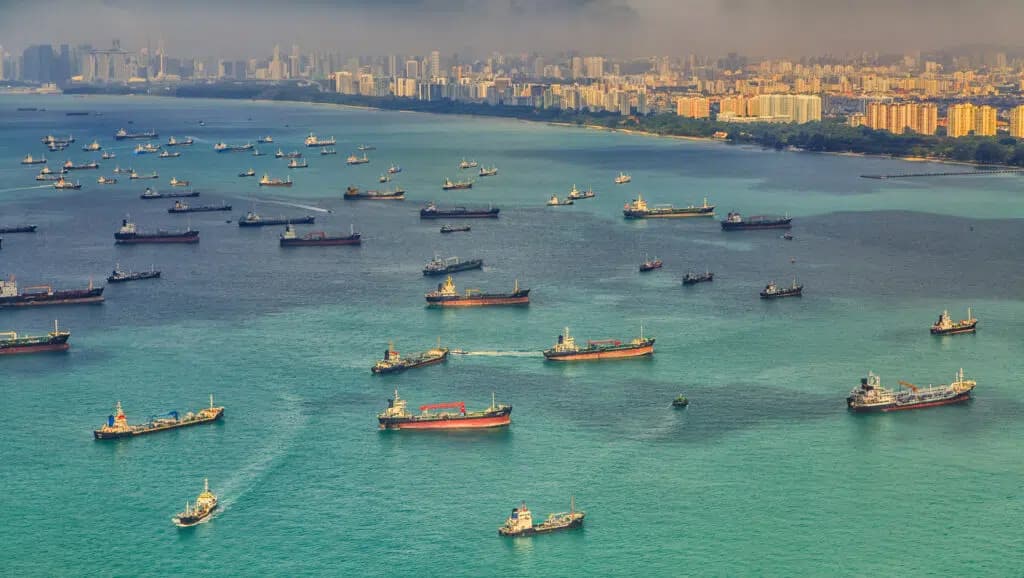
Port congestion is massive – especially in Melbourne at the moment.. There are 7-8 ships generally in the berthing queue which can meet a ship can sit at anchor for 20 to 24 days before they are finally able to berth.
Having the vessels sit at anchor costs the shipping lines around $100,000 per day operating costs. So shipping lines are very weary about sending vessels there at the moment if they know it’s going to cost them millions to sit in anchor offshore waiting for a berthing slot. If the wait times are going to be too long and the costs too high to wait to discharge / collect cargo at any given port– they will make the decision to omit the port all together so they can maintain their schedule with the other ports in their routing.
When the shipping lines do make the decision to omit a port, all the cargo that was there ready to be loaded simply gets ‘rolled’ to the next vessel and we are instructed to send trucks in to collect anything that has been delivered to the terminal to free up space – it is very difficult / costly / time consuming when this decision is made and the shipping lines will not accept any liability or pay any of the costs associated with this decision.
The other thing that is adding to the problem is the ongoing failure of large amounts of vehicles due to Australian Quarantine / Biosecurity detecting risk material within the vehicles.
Quarantine inspect 5% of vehicles on every vessel that comes into port, and if any of the vehicles fail then the whole vessel is ordered for cleaning, this could be 3000 cars – the port is simply overwhelmed, they only have the capacity to wash a few hundred cars a week (although they are working hard to increase this number) so as soon as a vessel of vehicles fails it’s inspection and requires biosecurity cleaning then due the sheer volume of cars the backlog is immediately multiple weeks long.. Furthermore, vehicles can’t be removed from the port until they are released from Biosecurity which means there is often minimal space to offload further vehicles from incoming vessels.
The ports have also recently implemented storage charges for the OEM’s, they vehicles get washed whenever the port gets to them, but they still only grant them the day of the quarantine release and two additional days to remove cars from the terminal, and logistically it’s near impossible to move hundreds of cars out of the port with minimal notice so the OEM’s are getting slugged with storage bills into the multi millions
Since Melbourne is so congested, shipping lines are diverting to Port Kembla and it’s already causing immense pressure on Port Kembla so that’s almost certainly going to be the next port that ends up with significant congestion and delays again due to the massive increase in volumes due to the diversions.
One solution that comes to mind is ‘well why don’t you just use an alternate port?’
Unfortunately, in most cases there are no alternate ports – in Melbourne, the port operator MIRRAT has the exclusive contract so shipping lines do not have the ability to simply choose another port – if you want to berth your roll on, roll off vessel in Melbourne then you have to use MIRRAT, There is another port called Appleton Dock which is suitable, however vessels can only divert to Appleton dock at MIRRATs discretion, they can’t just opt to use a different port voluntarily which makes it very difficult for shipping lines to plan in advance.
The shipping lines have looked into other ports like Geelong, Newcastle, Townsville etc but those ports need to do a lot of work before they meet biosecurity requirements - so that solution is many months away at best.
In conclusion the problem is multifaceted, there are a range of reasons we are seeing significant congestion, vessel omissions and delays and the reality is that there is no easy solution – for now all we can do is to adapt to what will be the new normal with regards to moving roll on, roll off cargo in or out of the ports.
Award Winning Industry Leader

WINNER
Best International Automotive Cargo Logistics Enterprise - 2021
WINNER
Award for Innovation in End-to-End Freight Transport - 2021

FINALIST
Freight Forwarder of the Year Award - 2018
FINALIST
Young Achievement Award 2018 (Nick Proctor)
FINALIST
Young Achievement Award 2018 (Mel Mather)
FINALIST
Freight Forwarder of the Year Award - 2017
FINALIST
Young Maritime Professional of the Year 2016